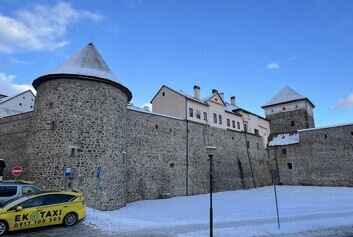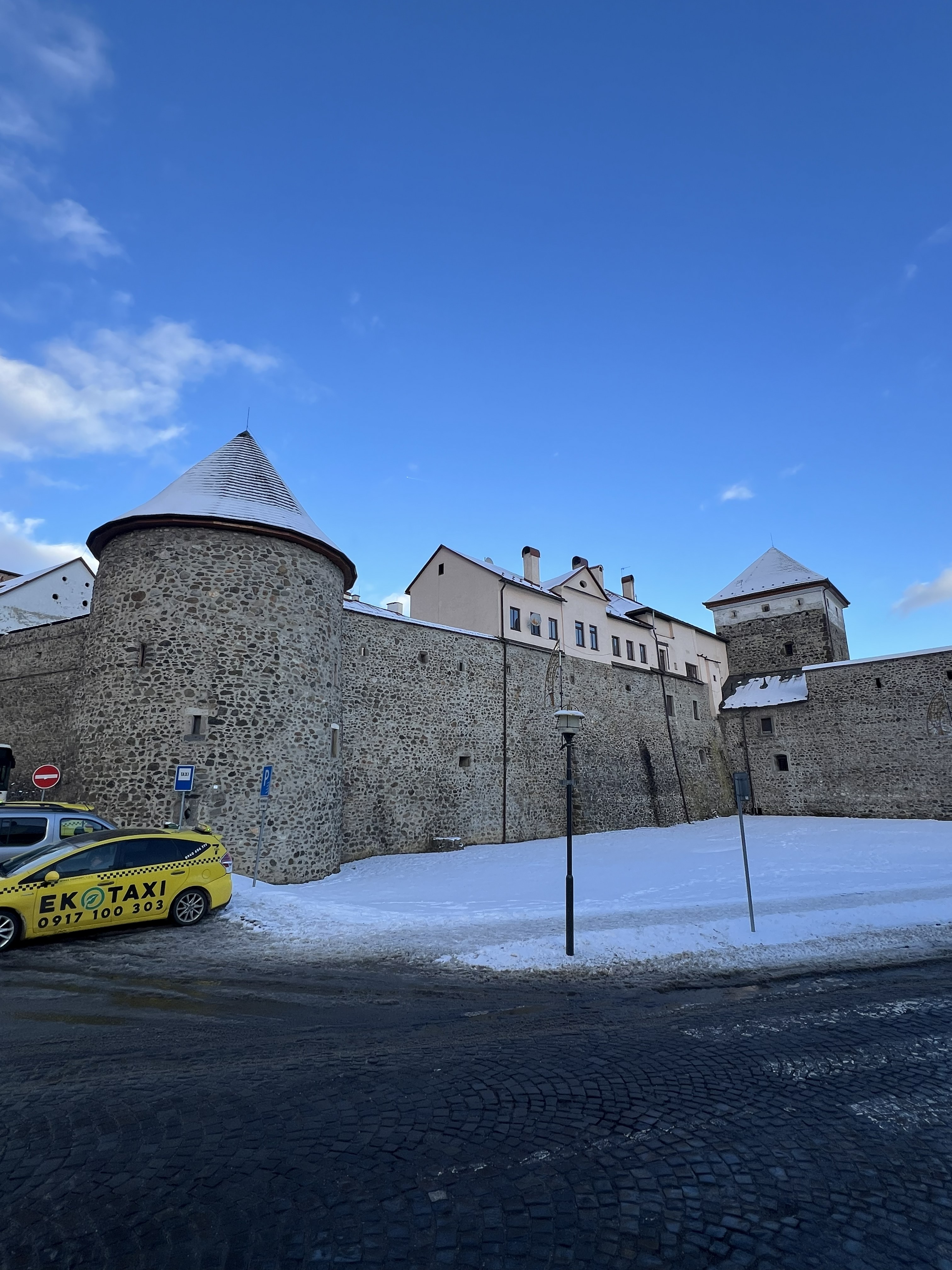
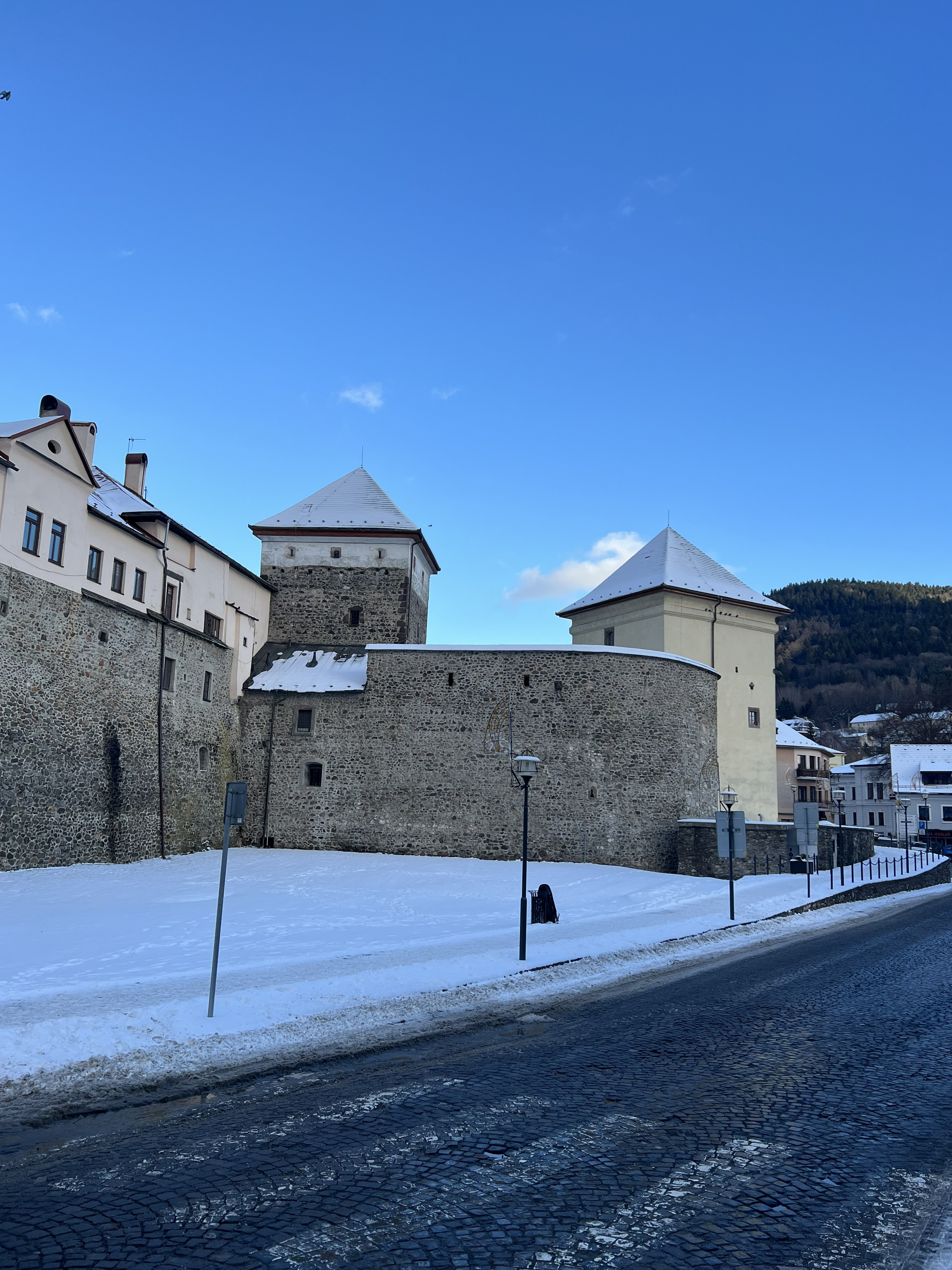
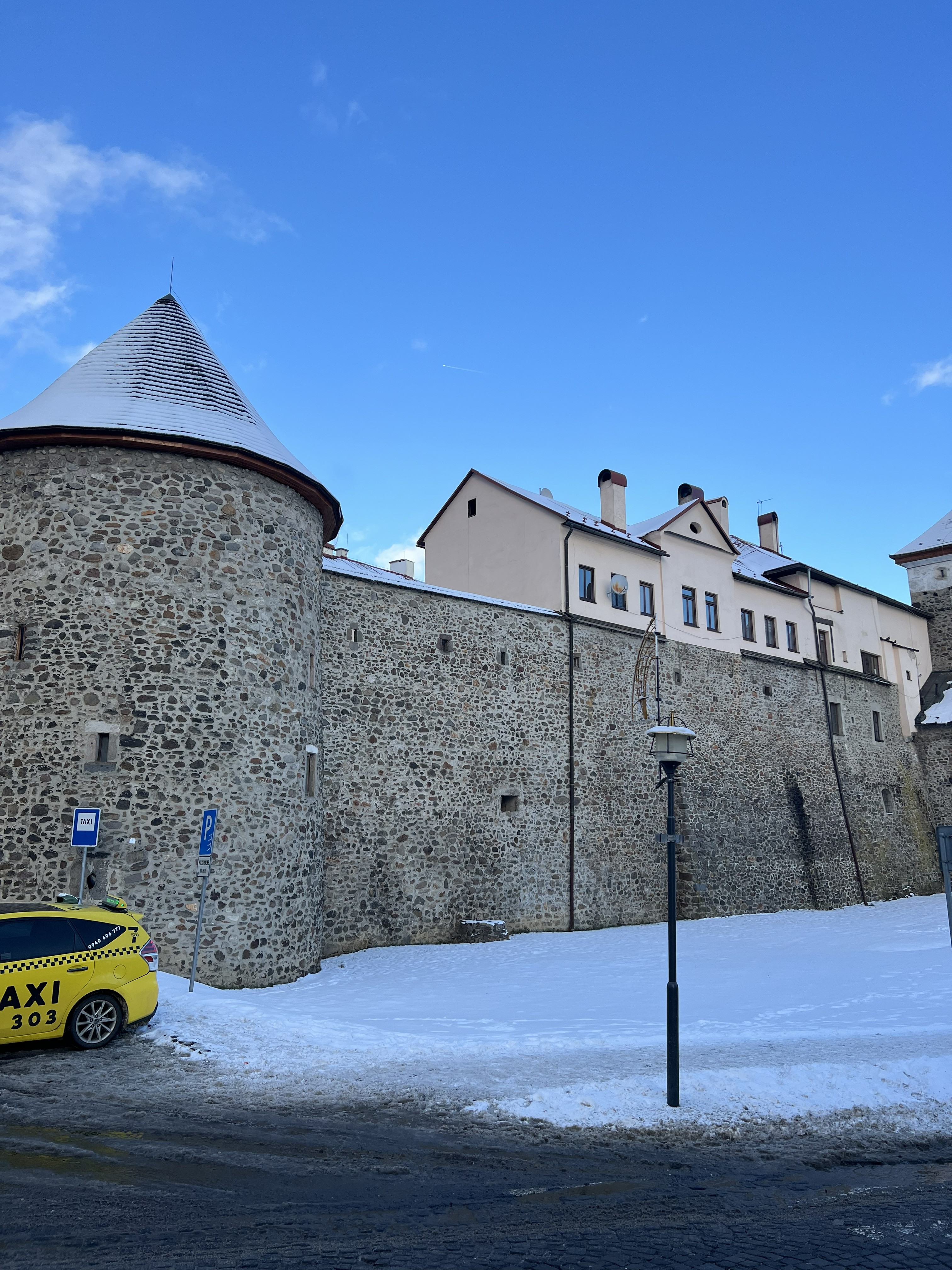
The historic fortifications of Kremnica represent one of the most valuable and best-preserved defensive systems in Slovakia.
Although two of the original three entrance gates were removed over time and part of the north-eastern wall was damaged, the basic structure of the walls and their defensive elements have survived almost intact.
Historical Context and Function
The fortifications were built in the first third of the 15th century following a decree issued in 1405 by King Sigismund of Luxembourg, ordering the fortification of important royal towns. The system enclosed the historic core of the town (approximately 45,000 m²) and connected to the defensive walls of the castle area, forming a comprehensive barrier protecting both inhabitants and the town’s wealth from military threats.
Architectural Features
The walls were constructed of stone masonry, reaching heights of 5–7 metres in places. The fortifications were reinforced with round towers at the southern corners, known as the Red Tower (south-east corner) and the Black Tower (south-west corner). A similar tower once stood at the north-west corner but was removed during the expansion of the mint.
Various types of loopholes (slit and keyhole shapes) have been preserved along the wall crown, allowing protected firing positions during sieges. Access to the defensive walkway was provided by wooden galleries.
Significance and Values
The fortification system of Kremnica is not only an important example of medieval military architecture but also a cultural monument reflecting the town’s historical importance as a royal mining centre. It protected wealth generated by intensive mining and minting activities and contributed significantly to shaping the medieval urban character of Kremnica.